Apollo Neuro is an intervention — it actively calms your nervous system in the moment. WHOOP is a monitor — it tells you how depleted you already are. They're solving different problems. Most people in perimenopause need both, but if you can only choose one, the answer depends on whether stress or recovery tracking is your bigger gap.
Why this comparison matters for perimenopause
During perimenopause, two things tend to spiral together: your stress response becomes harder to regulate as oestrogen drops, and your sleep quality deteriorates — which makes the stress worse. Both Apollo Neuro and WHOOP 4.0 address this cycle, but from opposite ends.
Apollo Neuro intervenes at the nervous system level using gentle vibration frequencies designed to shift you from fight-or-flight into rest-and-digest. WHOOP tracks your HRV, strain, and recovery 24/7, then tells you — in precise, data-driven terms — exactly how hard your nervous system is working and how well it recovered overnight.
Research
Peer-reviewed studies on the Apollo wearable show significant improvements in HRV, focus, and sleep quality after consistent daily use — with the strongest effects appearing after 30+ days of regular wear.
— Apollo Neuroscience Clinical Studies →| Apollo Neuro | WHOOP 4.0 | |
|---|---|---|
| Price | ~$349 | Free device + $30/mo |
| What it does | Actively calms nervous system | Tracks recovery & strain |
| HRV tracking | No display or tracking | Continuous 24/7 |
| Sleep tracking | Basic via app | Detailed stages |
| Subscription | Optional ($7.99/mo) | Required ($30/mo) |
| Battery life | Up to 8 hours | Up to 5 days |
| Form factor | Wrist or ankle band | Wrist band only |
| Works passively | You initiate sessions | Always on |
| Works without phone | After setup | App required |
| Menopause features | Stress + sleep modes | Perimenopause journal |
| Clinical studies | Multiple peer-reviewed | HRV validation |
Apollo Neuro
What it does well
It actively does something
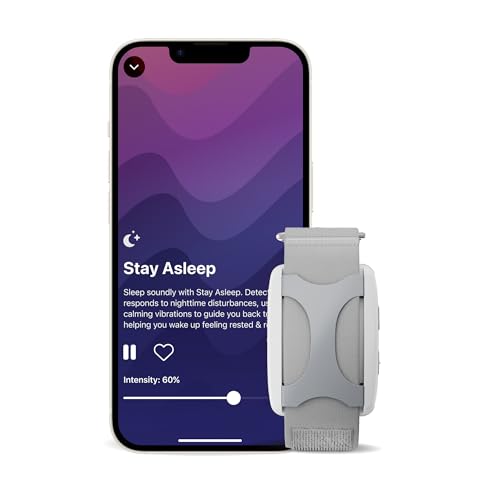
WHOOP tells you your nervous system is fried. Apollo Neuro tries to fix it. The device delivers precisely calibrated low-frequency vibrations to your wrist or ankle that are designed — and clinically shown — to shift your autonomic nervous system toward a calmer state.
During perimenopause, when your stress response can misfire due to hormonal shifts, having an active intervention is meaningfully different from having better data about the problem.
Seven modes for different moments
Apollo's seven modes (Energy, Social, Focus, Calm, Meditation, Sleep, Recover) let you dial in the effect you need. The Sleep mode is the most directly relevant — worn on the ankle during sleep, it gently nudges your nervous system toward deeper, more restorative rest without any screen interaction.
The Calm mode is the one most women in perimenopause end up using most — triggered before a meeting, before bed, or mid-afternoon when the cortisol spike hits.
Wears on the ankle during sleep
The ankle placement means you can use it overnight without the wrist bulk or the light-emission of most trackers. For women who already wear a tracker on their wrist, this is a genuine advantage.
Honest cons
You have to remember to use it
Apollo is not passive. It requires you to open the app, select a mode, and start a session. On days when you're most depleted — which is precisely when you need it most — you're least likely to remember. WHOOP's always-on tracking removes this friction entirely.
Battery lasts 8 hours, not 24
At up to 8 hours per charge, Apollo can't do both a full day and a full night without a recharge. Most users choose sleep over daytime wear, which means the stress relief during the day (when you arguably need it most) requires deliberate planning.
No recovery data at all
Apollo has no ability to tell you how recovered you are, what your HRV trend looks like, or whether your sleep was actually restorative. If you want to know whether what you're doing is working, you need a second device.
WHOOP 4.0
What it does well
The best continuous HRV monitoring available
WHOOP's 24/7 HRV tracking is the most clinically detailed recovery data you can get from a consumer wearable. During perimenopause — when HRV tends to be more volatile and the connection between hormonal fluctuations and recovery is direct — having this data is genuinely useful.
Over a few weeks, you can start to see patterns: your HRV drops the week before your period (or what used to be your period), recovers after good sleep, tanks after alcohol, and responds noticeably to stress. This map is hard to build without continuous monitoring.
Perimenopause journal feature
WHOOP added a dedicated perimenopause tracking feature that lets you log symptoms — hot flashes, brain fog, mood changes, joint pain — and correlate them with your biometric data. Over weeks, the app can show you which physiological patterns precede your worst symptom days.
This is the most clinically-oriented menopause feature currently available in a consumer wearable.
5-day battery, screenless design
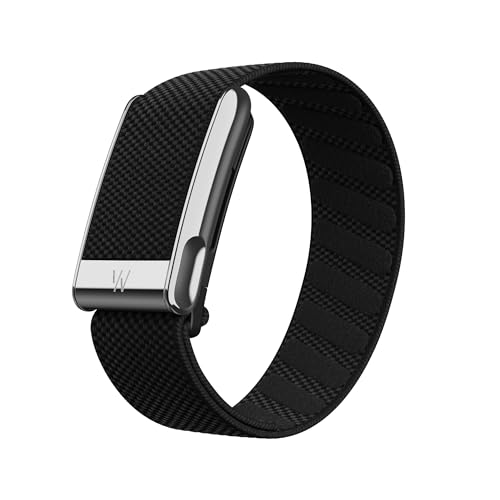
No screen means no late-night checking, no notification distraction, and significantly longer battery life than any smartwatch. WHOOP is deliberately designed to be invisible — data only through the app, never on your wrist.
Honest cons
Subscription is non-negotiable
WHOOP charges $30/month or $239/year, forever. The device is free with the subscription, but there's no buy-once option. Over three years, you're paying $720+ for software access. That's a meaningful ongoing cost on top of the Apollo Neuro's one-time $349.
It tells you about the problem, it doesn't fix it
WHOOP is a monitor. It gives you extraordinary data about your recovery and stress. But it doesn't do anything to improve either. You still have to action the insights yourself — which requires knowing what to do with a 48 recovery score beyond 'rest more'.
Best for the already-engaged
WHOOP rewards people who are willing to engage deeply with their data. If you're not interested in understanding strain scores, HRV trends, and sleep debt math, the device is more overwhelming than helpful. Apollo Neuro is simpler to use — you don't need to understand the science to feel the effect.
Apollo Neuro is best for
- Women experiencing acute stress or anxiety spikes during perimenopause
- Anyone who wants an active intervention, not just more data
- People who already track with Oura or another device and want to layer in stress relief
- Night sweats and sleep onset difficulty — the ankle-worn Sleep mode is specifically helpful
- Budgets that prefer a one-time cost over ongoing subscription
WHOOP 4.0 is best for
- Women who want a detailed, data-driven picture of their hormonal cycle and recovery patterns
- Anyone serious about understanding the relationship between lifestyle choices and their perimenopause symptoms
- People who find knowing the cause of a problem more motivating than treating the symptom
- Athletes or active women who want to manage training load around hormonal fluctuations
- Those who want the most comprehensive menopause-specific tracking feature currently on the market
Our verdict
Best active intervention
Apollo Neuro
If your primary challenge is stress dysregulation, acute anxiety, or sleep onset difficulty — and you want something that actively works on the problem rather than just reporting it — Apollo Neuro is the pick. It's also the better choice if subscription fatigue is a concern.
Buy Apollo Neuro on Amazon →Best recovery intelligence
WHOOP 4.0
If you want to build a genuine data-driven understanding of how perimenopause is affecting your body — including the dedicated perimenopause journal and continuous HRV monitoring — WHOOP delivers something no other wearable currently matches. The subscription cost is real but the depth of insight is real too.
Buy WHOOP 4.0 on Amazon →Many women use both: WHOOP for understanding and Apollo for intervention. If budget allows one device, ask yourself the honest question — do I need better data, or do I need something to actually help right now?