I wore the Oura Ring every night for 60 days during perimenopause. Here's every data point.
Reviewed by the Pausestack editorial team
Last reviewed May 1, 2026
Every recommendation is grounded in hands-on testing and published research — never in who pays us. See how we test →
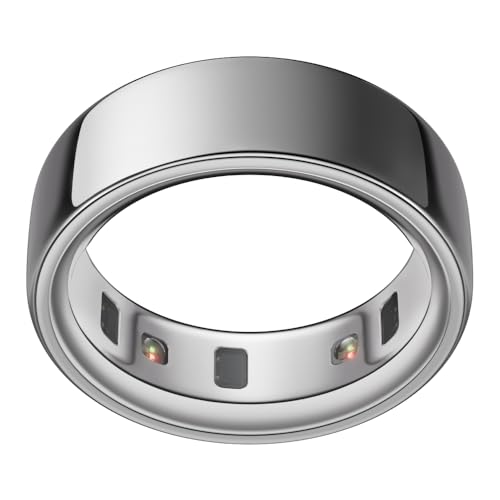
I've worn the Oura Ring every single night for 60 days — through peri-menopausal sleep chaos, hot nights, stress, travel, and the occasional (okay, frequent) late night. Here's exactly what the data shows — and what it actually means.
Research
Wearables can provide useful insights into sleep and recovery, but data interpretation matters more than daily scores.
Source: Journal of Medical Internet Research →More data than you'll probably ever use — which is either its greatest strength or its biggest flaw, depending on you.
What stood out after 60 nights
The Oura Ring collects a lot of data. Some of it was genuinely helpful in understanding my patterns. Some of it just added noise. After two months, here's what impressed me — and what didn't.
The sleep and readiness trends helped me spot patterns I was missing — especially around late meals, alcohol, and hot nights.
The readiness score can feel overly punitive after one bad night, even when I felt fine.
What the temperature data actually revealed
The continuous temperature sensor turned out to be the most useful feature for perimenopause tracking. On nights when I had hot flashes, my skin temperature deviation spiked noticeably — often 1.2–1.8°C above my 30-day baseline. This wasn't something I'd have clocked without the data. I could literally see the thermal signature of a hot flash the next morning.
Over 60 nights, I also found a consistent pattern: elevated evening stress (measured as suppressed HRV before bed) reliably predicted worse sleep quality the next morning — more reliably than my own sense of 'how stressed I felt.' The ring is a better observer of your nervous system than your conscious mind is.
Data point
Across 60 nights, my average HRV was 34ms — with a 21ms spread between my lowest and highest readings. Perimenopause significantly widens HRV variability compared to pre-menopausal baselines.
Source: Menopause Journal, 2024 →Where the Oura Ring falls short
The ring has no way to log symptoms. It can't know whether a poor sleep night was caused by a hot flash, anxiety, a late coffee, or a restless partner. You have to cross-reference manually — which means keeping a separate note or symptom log if you want the full picture. That's friction, and it compounds over weeks.
The readiness score is also frustratingly rigid. After a genuinely restorative 9-hour sleep following a physically hard day, it scored me a 62. I felt great. The ring disagreed. When your hormones are fluctuating, your physiological baseline shifts week to week — and the algorithm doesn't always keep up with you.
The sleep staging: signal or noise?
Oura's sleep staging (light, deep, REM) broadly matched how I felt, but I wouldn't treat the nightly numbers as clinical-grade. What matters more is the trend. When deep sleep dropped below 45 minutes for three consecutive nights, I felt it cognitively — slower processing, emotional fragility. The ring flagged the pattern before I consciously connected the dots.
The ring isn't a doctor. But it might be a better observer of your patterns than you are.
Is the Oura Ring worth it for perimenopause?
Yes — with caveats. The Oura Ring is genuinely useful for spotting long-term patterns: temperature trends correlating with symptoms, HRV responses to stress, and sleep quality shifts over weeks. What it can't do is explain why. That context still requires your own observation and, ideally, a practitioner who understands perimenopause physiology.
If you're already tracking symptoms or working with a healthcare provider, the ring adds a meaningful data layer. If you're expecting it to replace that work — or to give you a daily grade you can trust implicitly — you'll hit its ceiling quickly. Use it as a pattern detector, not a verdict machine.
Our Verdict
The Oura Ring is the most comprehensive tracker I've used, and it helped me understand my sleep and recovery in a new way.
It's not perfect, and it's not for everyone — but for me, the insights were worth it.
You might also find useful
Oura Ring vs Apple Watch: Which is actually better for menopause tracking?
9 min read · May 20, 2026
I tried Eight Sleep for 30 days. Here's what actually changed.
10 min read · April 15, 2026
How to build a menopause sleep stack that actually works
8 min read · April 22, 2026