5 Signs Your Sleep Tracker Is Actually Helping (And 3 Signs It Isn't)
Reviewed by the Pausestack editorial team
Last reviewed June 6, 2026
Every recommendation is grounded in hands-on testing and published research — never in who pays us. See how we test →
A sleep tracker can be one of the most useful tools you own during perimenopause — or the most anxiety-inducing thing on your nightstand. Whether yours is helping or hurting comes down to how you're using the data, not which device you chose.
Research
Orthosomnia — the obsessive pursuit of 'perfect' sleep driven by tracker data — is a documented phenomenon that can actually worsen sleep quality in otherwise healthy sleepers.
Journal of Clinical Sleep Medicine (2017) →5 signs your tracker is actually helping
The right tracker, used well, can cut through the fog of perimenopause and give you a real-world picture of what's affecting your body. Here's what that looks like.
You've spotted a pattern you didn't know existed — late alcohol, hot nights, stress — and you've actually changed something because of it.
You check your score every morning and it sets the tone for your whole day, regardless of how you actually feel.
1. You've changed a behaviour because of it. You noticed that your deep sleep tanks when you eat after 8pm, or that your resting heart rate spikes the night after a stressful day. And you've acted on it. That's the device doing its job.
2. You're catching temperature deviation patterns. During perimenopause, nightly skin temperature shifts often precede a hot flash by several hours. Trackers like the Oura Ring and Apple Watch that monitor overnight temperature deviation can show you this pattern before you even feel it — giving you a rough map of your hormonal cycle when your period is no longer reliable.
3. Your HRV trend is meaningful to you. You've stopped obsessing over the daily number and started watching the 30-day trend. When your HRV trend is rising or stable, your recovery is on track. When it's been falling for two weeks, something is off — and you know to investigate.
4. It's confirmed what you already sensed. You knew last Tuesday was a write-off, and the data showed exactly why — the tracker validated your lived experience rather than contradicting it. That kind of confirmation builds trust in your own body signals.
5. You use it as one data point, not the verdict. You slept badly according to the device but feel fine — so you treat it as a data anomaly and go about your day. The score informs you; it doesn't govern you.
The data should serve your body. Your body should not serve the data.
3 signs your tracker might be making things worse
Sleep tracking is not for everyone, and there are specific patterns that suggest your device is adding friction rather than insight.
1. You lie awake worrying about your readiness score. If you're anxious about what the app will say before you've even closed your eyes — or if a low score triggers a cascade of self-criticism — that anxiety is measurably worse for your sleep than the bad night that caused the score.
Research
Sleep-related anxiety and hyperarousal are among the strongest predictors of insomnia severity. Introducing a second source of performance pressure at bedtime compounds the problem.
Sleep Medicine Reviews (2019) →2. You're ignoring how you feel in favour of the number. You woke up feeling rested, but your readiness was 62 — so you cancelled your morning walk 'to recover'. If the device is overriding your actual felt experience regularly, it's the wrong tool for your relationship with data.
3. You're not sleeping without it. If the thought of a night without your tracker makes you anxious, that's a sign of dependency rather than insight. A good tracker should feel like a useful lens, not a crutch.
What to do if your tracker is making things worse
Take a two-week break. Wear the device but don't look at the app. Sleep without knowing your scores. If your sleep improves, the data was creating pressure rather than providing insight. If you genuinely miss the information and felt worse without it, you likely have a healthy relationship with the tool.
If you decide to continue, set one rule: only look at your weekly trends, not daily scores. Day-to-day variation is noise. The signal is in the four-week pattern.
Which trackers are worth it for menopause specifically?
Not all trackers are equally useful for perimenopause. The most relevant metrics are overnight skin temperature deviation, HRV trends, and sleep stage breakdown — not step counts or VO2 max estimates. The Oura Ring 4 and WHOOP 4.0 are consistently the strongest performers on these specific metrics. The Apple Watch Series 9 is a solid all-rounder but gives less granular sleep stage data than either of the dedicated trackers.
If you're newer to tracking and want to start without the subscription, the Apple Watch is the lowest-friction entry point. If you want the most detailed overnight hormonal picture available in a consumer device, the Oura Ring is the current benchmark.
Our Verdict
A sleep tracker is a tool, not a verdict. Used as a lens on patterns over weeks, it can genuinely help you understand what your body needs during perimenopause. Used as a daily performance score, it can make things worse.
The test is simple: are you sleeping better because of it? If yes, keep going. If not, take the two-week break and see what happens.
Compare sleep trackers →You might also find useful

I wore the Oura Ring every night for 60 days during perimenopause.
11 min read · May 1, 2026
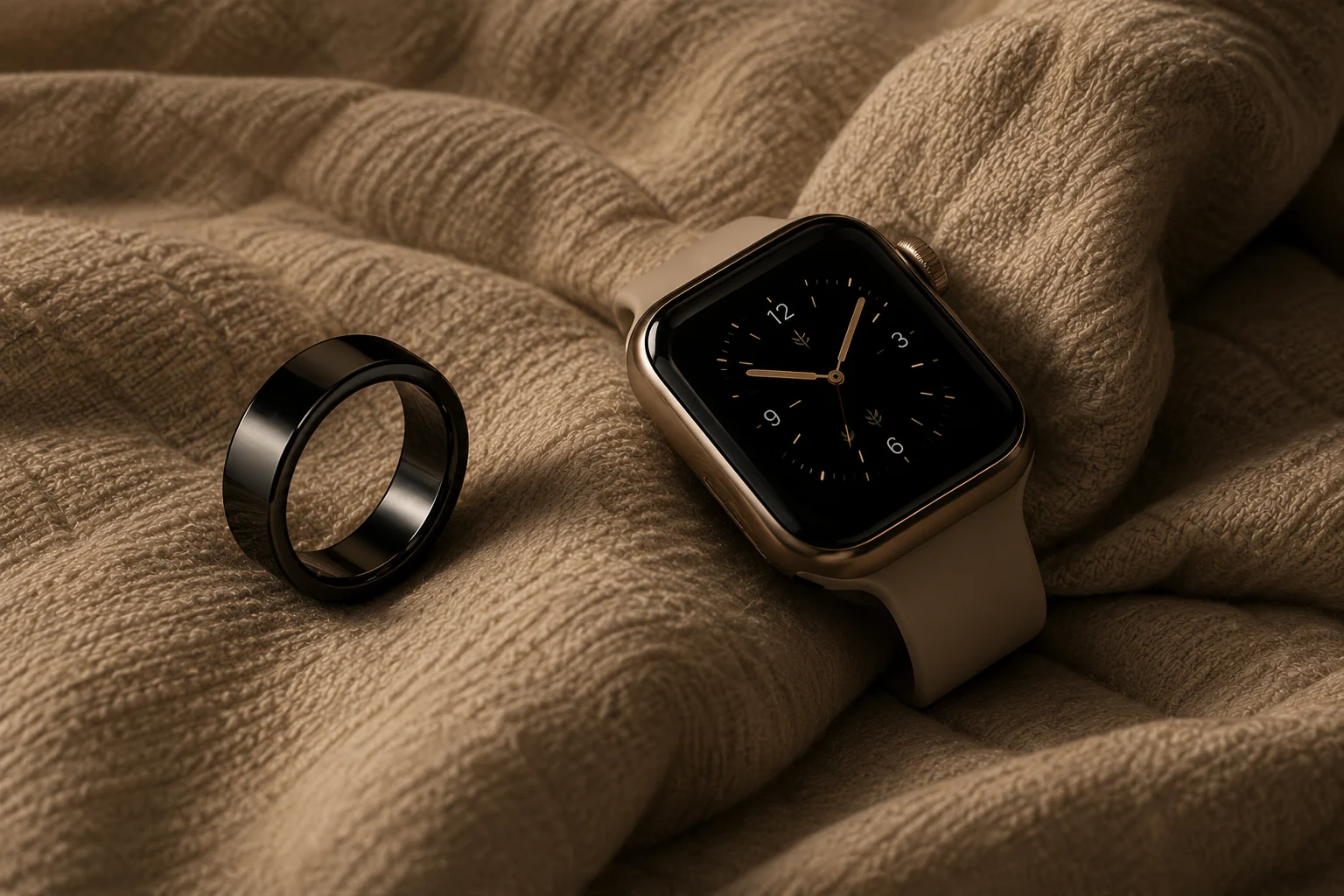
Oura Ring vs Apple Watch: Which is actually better for menopause tracking?
12 min read · May 26, 2026
How to build a menopause sleep stack that actually works
8 min read · April 22, 2026